

Support to the military defence
The Swedish Coast Guard has an important role in total defence and must be able to support the Swedish Armed Forces during heightened preparedness and war. Through planning, exercises and improved cooperation, the agencies strengthen their ability to act together and to use the Coast Guard's resources where they are needed.
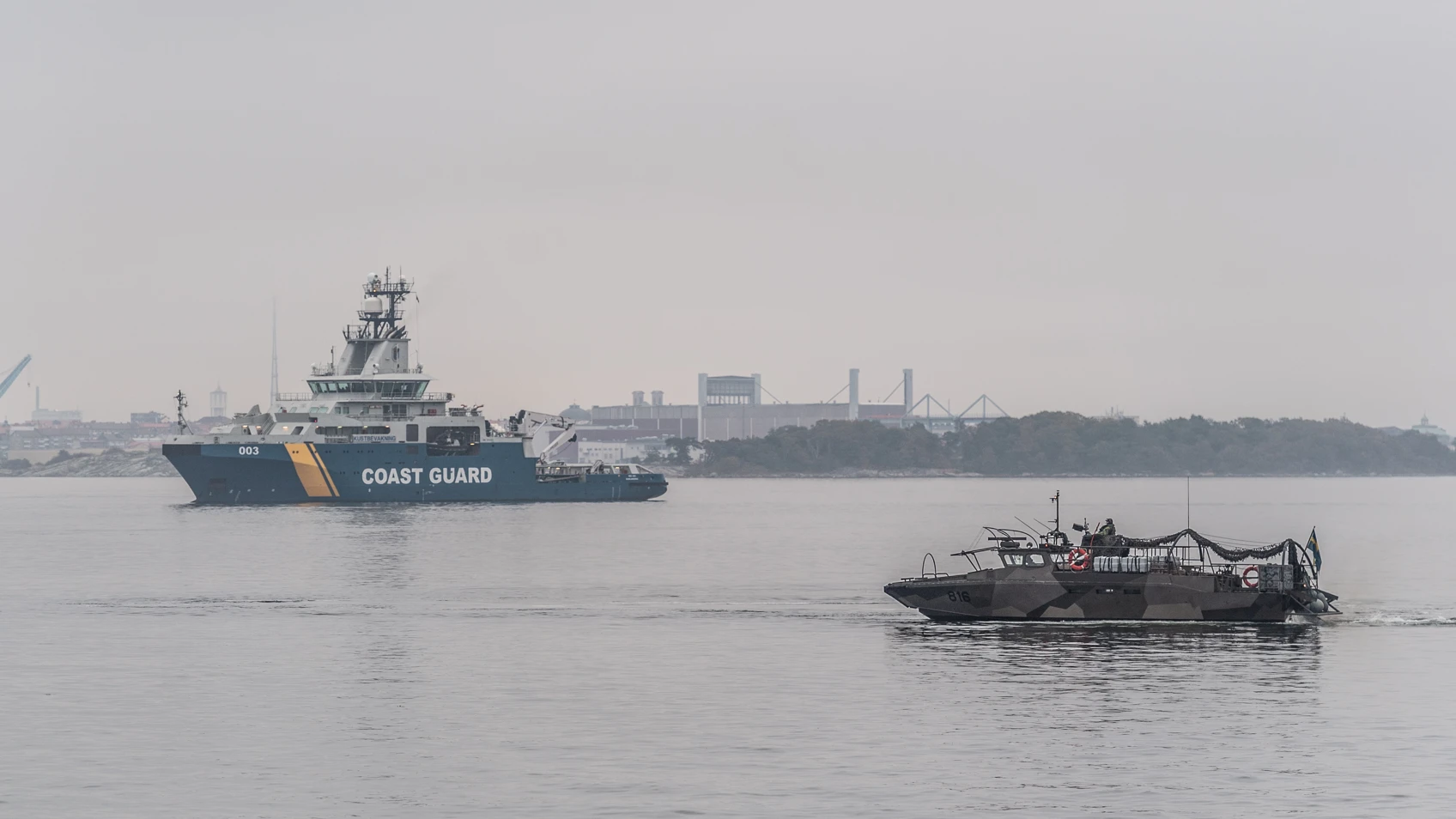
The military defence must defend Sweden against armed attack, assert Sweden's territorial integrity, and prevent and manage conflicts and war. The military defence must help to keep the peace and deter war. For a potential adversary, the disadvantages of attacking Sweden must be greater than the advantages. It is therefore important that the military defence is well prepared and has the resources it needs to defend the country over time.
The Coast Guard's responsibility during heightened preparedness
During heightened preparedness, the Coast Guard's responsibilities change. We must have both the capability and a plan for our own tasks, and we must also support the military defence. This is regulated in the Ordinance (1982:314) on the use of the Coast Guard within the Swedish Armed Forces. This means that during heightened preparedness, the Swedish Armed Forces can use personnel and equipment from the Coast Guard if the Government so decides.
As a civilian actor at sea with the greatest capability above, on and below the surface, we cooperate with the Swedish Armed Forces and other total defence actors to secure shipping, water protection and critical infrastructure.
We continue to operate on the basis of the Coast Guard Act and the regulations for total defence, where resources and personnel can be made available for military and civilian cooperation needs.
The Coast Guard and NATO
Sweden's NATO membership creates new conditions for Sweden's security and total defence work. The Swedish Coast Guard is part of Swedish total defence and, through its activities, contributes to Sweden's commitments within NATO. This includes civil preparedness, cooperation and strengthening the ability to protect vital societal functions and Swedish critical infrastructure.
Read more about the Coast Guard's role in NATO
Developing support and cooperation
The Coast Guard and the Swedish Armed Forces are working to develop and clarify the Coast Guard's support to the Swedish Armed Forces during heightened preparedness and war. This includes increased operational cooperation, exercises, secure communication, real-time maritime situational information and intelligence sharing. We are also working to clarify our cooperation during a crisis at a level below armed attack.