
Collection page: the Swedish Coast Guard's news about Sea Owl I
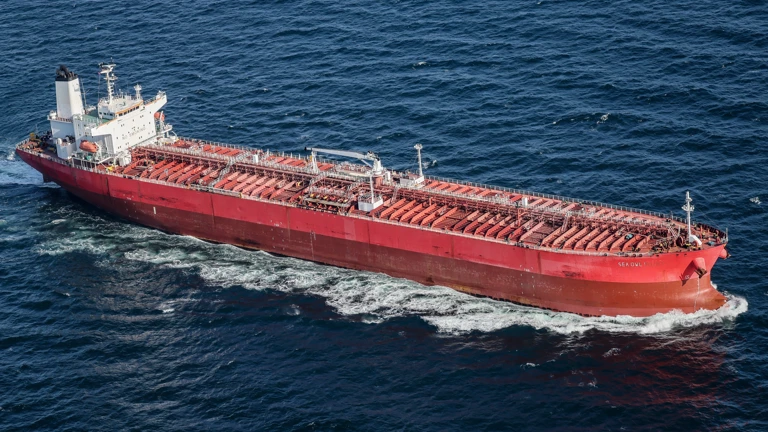
The vessel Sea Owl I, which was boarded by the Swedish Coast Guard and the Swedish Police Authority on 12 March, is anchored south of Trelleborg.
Published: 16 Mar 2026 at 12:40 PM
Update 13 March 2026, 17:00
Intensive investigation under way on Sea Owl I
Vessels that do not follow national and international law, and that choose to break international agreements, pose a high risk to shipping in Swedish waters, our fairways and harbours, and not least to the environment. For this reason, the Swedish Coast Guard has decided to intervene in two cases.
− Shipping must know that we uphold order at sea and act to increase safety for those who operate on our seas. Anyone who breaks this order must know that we will intervene when conditions allow, says Daniel Stenling, Deputy Head of Operations at the Coast Guard.
Sea Owl I is on the EU sanctions list
The Coast Guard has intervened against suspected offences under the Swedish Maritime Code (sjölagen), in order to protect safety on our seas. The operation was carried out against vessels suspected of sailing under a false flag and of being unseaworthy. Sea Owl I is on the EU sanctions list.
In the case of Caffa, the deficiencies on board the vessel proved so serious that the Swedish Transport Agency decided on a prohibition on use. The vessel must not continue its voyage until the deficiencies have been remedied. It is not possible today to say whether the Swedish Transport Agency will also issue such a prohibition for Sea Owl I.
The investigations are extensive
The criminal investigations concern the offences of unseaworthiness and use of a forged document, gross offence, as well as further offences under the Swedish Maritime Code. They are led by prosecutors in Malmö. The Coast Guard carries out the investigative measures that the prosecutor instructs. A large part of the information about the suspected offences is covered by preliminary investigation secrecy. For this reason, the authorities have to be sparing with information. The prosecutor will return with more information when the investigations have reached a stage where more can be said.
The Swedish Prosecution Authority regularly updates the information about both investigations on its website.
Cooperation with the police National Task Force began in 2006
The Coast Guard's national boarding team has well-established and well-functioning cooperation with the Swedish Police Authority and the National Task Force for special operations in the maritime environment. It is natural to use this cooperation in events that may become complex and risky.
The Coast Guard has no further information about the operation and the investigation at present.
---
Update 12 March 2026, 22:00
Another intervention against a vessel with a false flag
Shortly after 20:30 on Thursday evening, the Swedish Coast Guard boarded a 228-metre-long tanker off Trelleborg. A preliminary investigation into a suspected offence under the Swedish Maritime Code (sjölagen), concerning unseaworthiness, has been opened. The operation is being carried out with support from the Swedish Police Authority.
The tanker Sea Owl I flies the Comorian flag. The Coast Guard suspects that it is not in the Comorian ship register, that it is sailing under a false flag and that there is therefore no flag state that can vouch for safety on board. The vessel is on the EU sanctions list.
− Our overall assessment is that the risk of safety deficiencies on board is high. On this basis, the vessel cannot be covered by what the Law of the Sea defines as innocent passage. The threats to maritime safety and the environment are too great. There are therefore grounds for intervening against the vessel, says Daniel Stenling, Deputy Head of Operations at the Coast Guard
Cooperation with the Swedish Police Authority
Sea Owl I was boarded in Swedish territorial waters by the National Task Force, with help from the Coast Guard's national boarding team and a police helicopter. The operation was planned.
Preliminary investigation led by a prosecutor
Work is currently under way out at sea. The Coast Guard has personnel on board to carry out a search of the premises and hold interviews. At this stage, the preliminary investigation concerns unseaworthiness. More authorities may become involved, depending on how events develop.
Second vessel boarded in a short time
On 6 March 2026, the Coast Guard, with help from the Swedish Police Authority, took control of the vessel Caffa off Trelleborg. The vessel was later made subject to a so-called international prohibition on use, decided by the Swedish Transport Agency. The master of Caffa is suspected of several offences under the Swedish Maritime Code (Sjölagen) and of use of a forged document, gross offence.
− Sweden upholds the law of the sea and the rules-based order that we have agreed on together. The Coast Guard's responsibility is to ensure that the rules at sea are followed. We will intervene against vessels that break them and that disturb safety in our territorial waters, says Daniel Stenling.