
Maritime safety inspections
The Swedish Coast Guard contributes to safe sea transport by checking dangerous goods, load securing, and the crewing and qualifications of vessels. We also work on maritime security to prevent serious crime against vessels and port facilities.
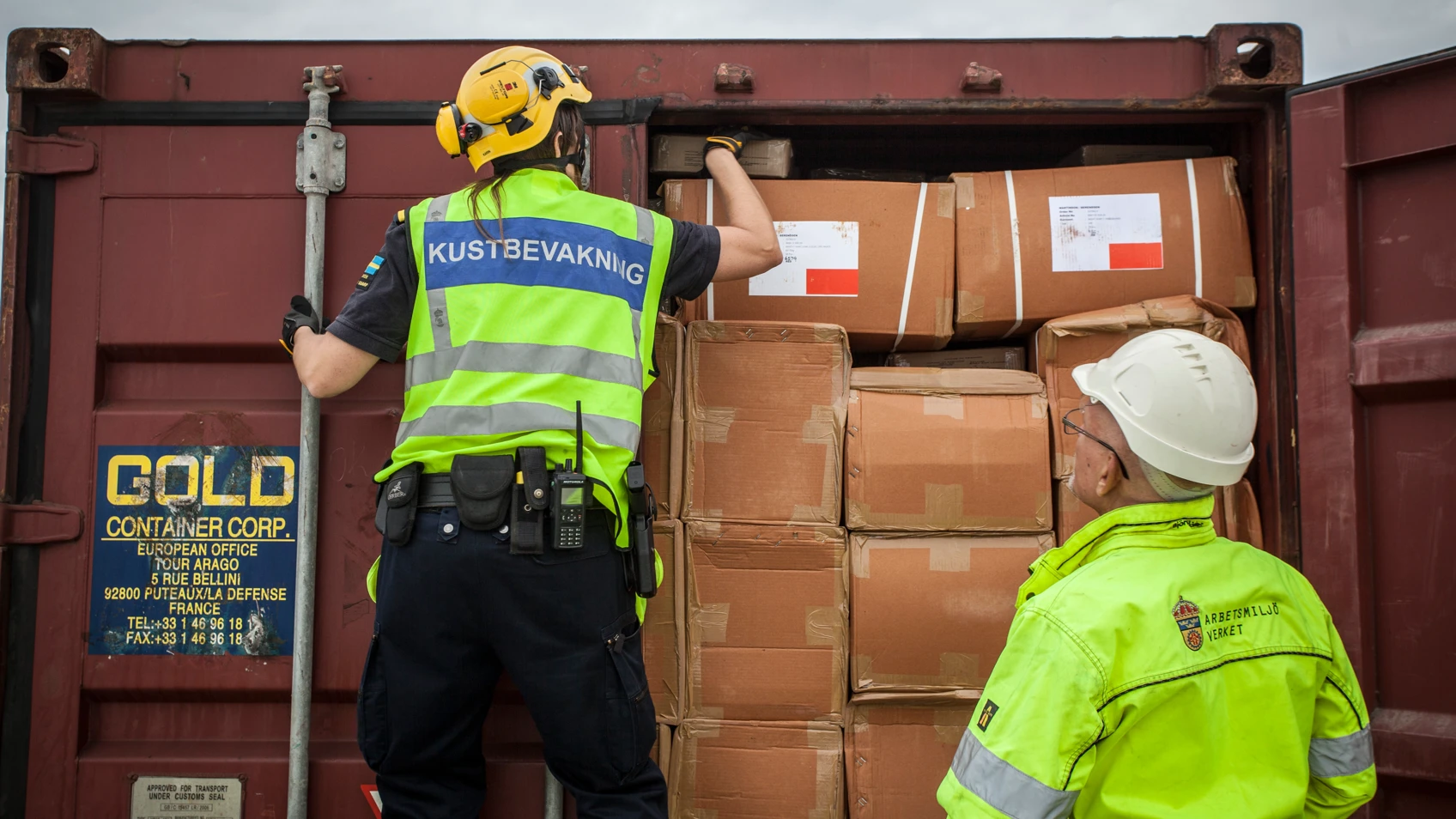
The Swedish Coast Guard works to prevent, stop and limit harm to life, health, the environment and property that can be caused by shortcomings in sea transport. The Coast Guard carries out checks on transport of dangerous goods in ports and on the securing of cargo for sea voyages. The checks are carried out independently, but also in cooperation with the Swedish Police Authority, Swedish Customs, the Swedish Radiation Safety Authority, the Swedish Transport Agency and the Swedish Civil Defence and Resilience Agency. When the Coast Guard works in ports, we also check whether drivers are sober.
Maritime safety inspections also include crewing and qualification checks on Swedish commercial vessels and Swedish leisure vessels.
The Swedish Transport Agency is the authority in Sweden with main responsibility for regulation, permit assessment and supervision in the transport sector. This includes supervision of civil shipping and covers maritime safety, maritime security and port security.
Load securing
The Coast Guard helps to prevent accidents on board vessels by checking the securing of cargo in cargo carriers that have been set aside for sea transport and are waiting to be loaded on board a vessel. The checks aim to find faults in load securing that can be a safety risk, both for the people on board and for other loaded goods, as well as for the surrounding environment.
The Coast Guard informs the driver (if there is one) and the shipping company about the fault or faults. The cargo carrier is not allowed to be loaded on a vessel or to continue its journey until the faults have been corrected. The Coast Guard also reports the load securing faults it finds to the Swedish Transport Agency.
Rules on load securing for sea transport are available in TSFS 2010:174.
Inadequate blocking and bracing of goods and poorly secured goods are the most common reasons why cargo carriers are stopped.
Dangerous goods
The Coast Guard is responsible for supervision of dangerous goods in the land areas of ports, regardless of mode of transport. This means checking goods in cargo carriers that are going on by road, by rail or by sea. The Coast Guard has the power to issue the injunctions and prohibitions that are needed, and also to stop further transport from a port if necessary.
The work focuses on the ports with the highest number of transports and particularly high risks, based on an annual supervision plan.
Crewing and qualifications
The Coast Guard supervises vessels to the extent that the Swedish Transport Agency decides in consultation with the Coast Guard.
The Coast Guard supervises Swedish vessels in international and national traffic with a gross tonnage of no more than 1500 tonnes for crewing checks and checks under the Working Time Act.
Passenger vessels in Swedish national traffic (except vessels operating between Gotland and the mainland) for checks of passenger numbers and registration/counting.
Swedish vessels in national and international traffic, regardless of gross tonnage, for checks of draught.
Swedish vessels in national traffic, regardless of gross tonnage, for checks of certificates.
Maritime security
Together with the Swedish Transport Agency and the Swedish Police Authority, the Coast Guard works to make sure that the international rules on enhanced maritime security on vessels and in port facilities (the ISPS Code) are followed.
The rules apply to all vessels of a certain size in international traffic. Under the rules, vessels with a gross tonnage over 500 tonnes that intend to call at a Swedish port must provide information on maritime security, in a notification in advance. The maritime security rules aim to protect the shipping sector against serious violent crime, including terrorism. The maritime security rules place an obligation on merchant shipping to send a notification in advance to SMC, Swedish Coast Guard Maritime Clearance.