
The Swedish Coast Guard and Raja held an environmental rescue exercise at Höga kusten
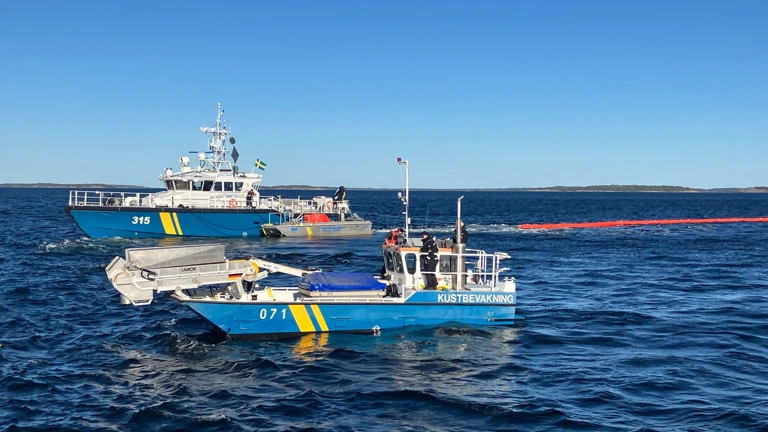
Last week, the Swedish Coast Guard held a joint environmental rescue exercise with Raja, the Finnish Border Guard, off the Högakustenbron bridge. KBV 181 took part together with the Finnish patrol vessel RV91 and the environmental rescue vessel Linja from the state-owned company Arctia.
Published: 15 May 2026 at 10:17 AM
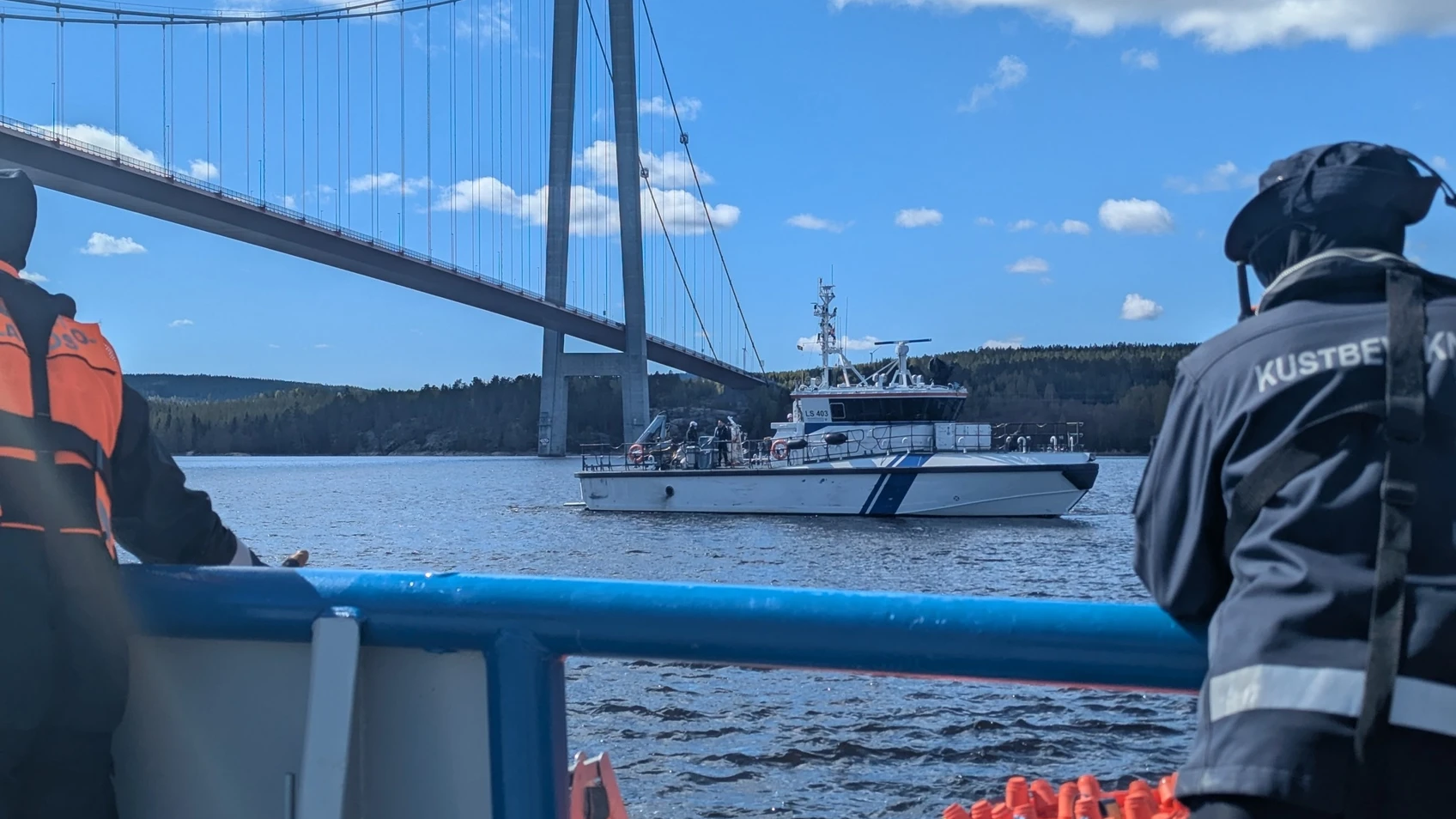
The aim of the exercise was to strengthen the shared ability to carry out environmental rescue operations at sea, and to further develop operational cooperation between Sweden and Finland. During the exercise, the vessels carried out an open U-sweep with a boom from an environmental rescue towing vessel. RV91 towed the sea boom out before KBV 181 took it over. At the same time, Linja used its oil recovery system to carry out recovery from the opening of the sweep.
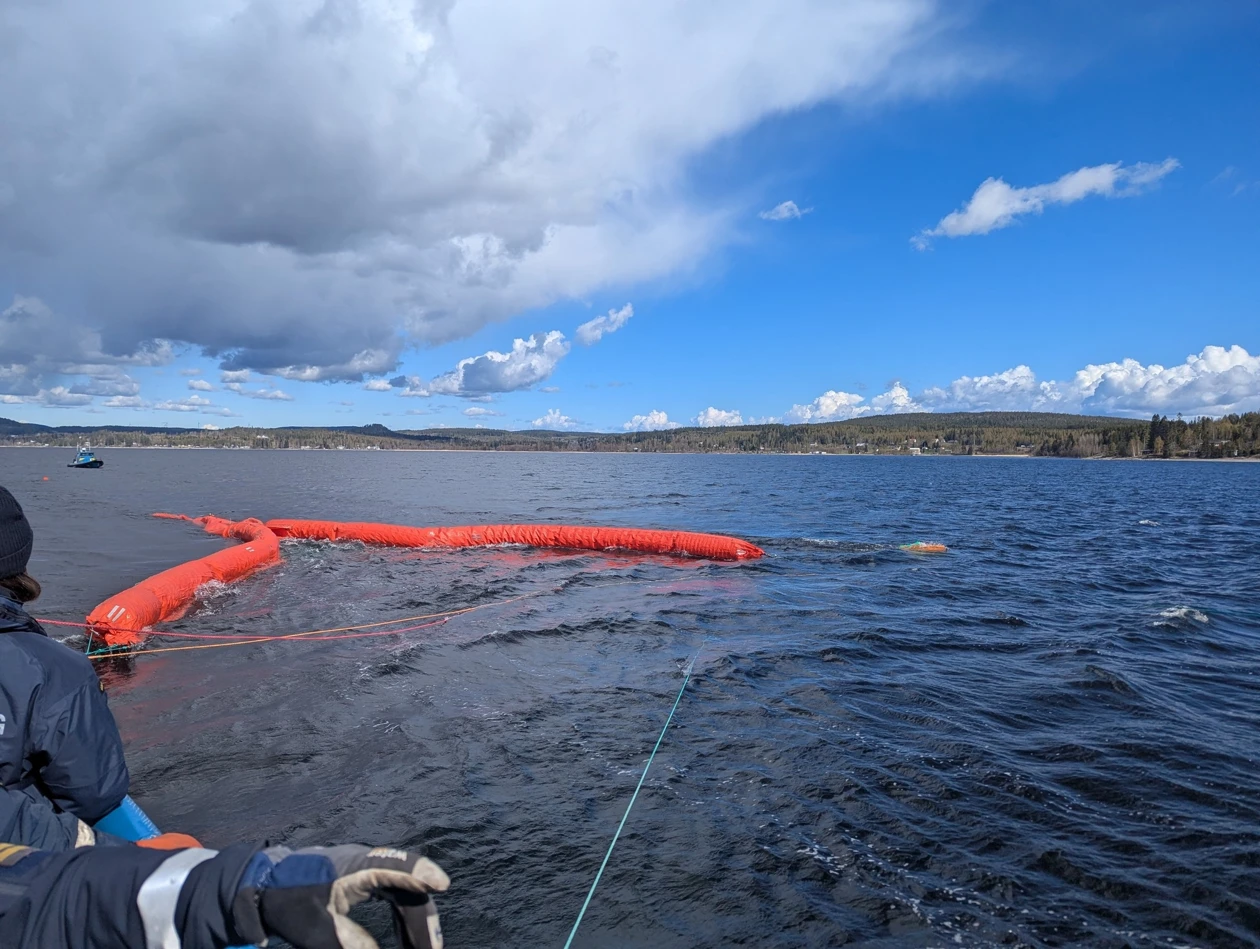
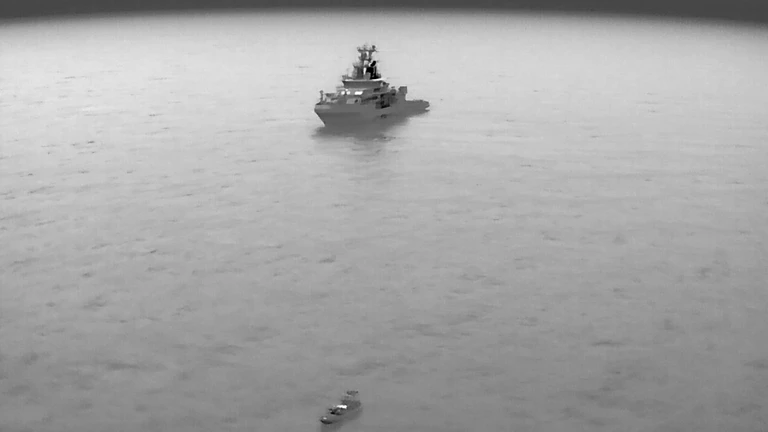
The exercise also included the use of Raja's unmanned aircraft system (UAS) for situational awareness and command. The Swedish Rakel and the Finnish Virve communication systems were also tested together under operational conditions. On the second day of the exercise, there were demonstrations of the Coast Guard's oil recovery system HSSS (High Speed Sweep System), and walk-throughs of equipment and systems at the environmental depot.
"By practising environmental rescue together with our Finnish colleagues, we build a shared capability that is important when it really counts. Our national agreements mean that we can quickly support each other in major incidents. But for the cooperation to work effectively, we need to know each other's working methods and systems before a real operation takes place. International cooperation between the countries benefits both rescue services and operational areas of work," says Cecilia Hennig, Head of Coast Guard Station in Umeå.
The national environmental rescue agreements strengthen the possibilities for the countries to assist each other in major incidents. They mean that each country can count on support from the other when needed.
The cooperation between the Coast Guard and Raja has long been established. The joint exercises are an important part of the work to maintain and develop Nordic environmental rescue capability.