
Jet skis
Riding a jet ski brings a responsibility for both safety at sea and the environment. If you ride one, you must have a personal watercraft driver's (PWC) license, follow the rules of sea traffic and show consideration for other people and wildlife.
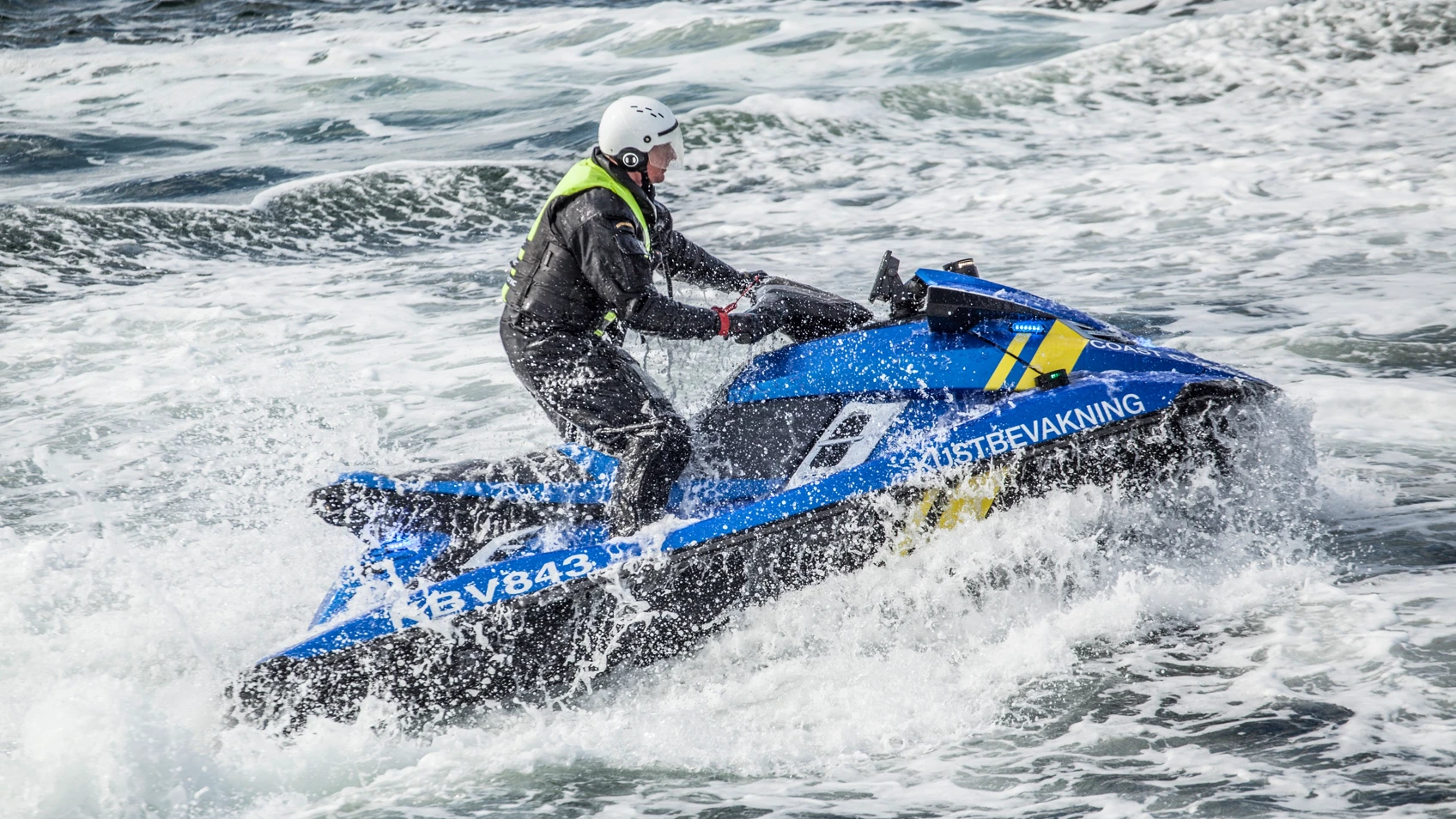
A jet ski rider has the same responsibility as other water users to follow the rules of the road at sea and to know the laws that apply. All rules on sobriety, speed limits, give-way rules and conduct at sea apply to jet ski riders and to operators of other boats and vessels alike.
Under maritime law, jet skis are treated like other types of leisure boats, with one exception: you must be at least 15 years old to ride one. When children or young people are out on the water, the Swedish Coast Guard usually informs them about the rules. If a law is broken, we contact the parents.
License is mandatory
You need a PWC license to ride a jet ski. Thelicense for jet skis is issued by the Swedish Transport Agency after an approved course.
The Coast Guard and the police carry out routine checks at sea to see whether the rider has a license.
The license can be revoked if the rider commits certain maritime offences, even when using watercraft other than a jet ski.
Questions and answers: the Act on proof of competence for jet skis
Reckless riding and negligence at sea
During the summer months, we receive many calls about jet ski riders who are seen as a nuisance or who show poor judgement. The Coast Guard can take action against, for example, speeding offences and negligence at sea. We work to prevent offences by being visible in the areas where we know many traffic offences occur. We talk to both jet ski riders and boat operators to inform them about the rules.
Tips for jet ski riders
Good knowledge of the jet ski you are riding is an important condition for high maritime safety. Jet skis accelerate very quickly and can be ridden at high speeds. This places great demands on the rider to be aware of both their own limits and the limits of the jet ski.
- Choose your route with care.
- Adjust your speed to your ability.
- Avoid places where people are swimming.
- Take care not to disturb wildlife.
- Always wear a life jacket.
- Remember that playful riding can make other water users feel unsafe.
Jet ski training in the Coast Guard
To ride a jet ski in the Coast Guard, you must complete mandatory jet ski training that combines theory with practice. The training teaches you, among other things, to manoeuvre and handle the jet ski at high speeds and on open sea. You then need to practise regularly to keep your skills fresh.
Do not disturb wildlife unnecessarily
Reckless jet ski riding can harm plant and animal life. Among other things, it causes underwater noise that disturbs fish and mammals. It can also easily contribute to the spread of invasive species, because plant parts that are cut up can stick to the jet ski and become established in new places. You should preferably not ride in shallow bays at all. These areas serve as spawning and nursery habitats for fish and are therefore especially sensitive. Riding destroys the seabed and makes the water cloudy, which affects reproduction.