
Release of hazardous substances and CBRNE
When hazardous substances leak out at sea, the situation can quickly become serious. The Swedish Coast Guard has special equipment, training and preparedness to handle releases and other CBRNE incidents and to limit the risks to people and the environment.
A large number of different hazardous substances are transported at sea. These substances can pose various risks to both people and the environment. Because there are so many different chemicals, risk assessments are often difficult. The properties and hazards of chemicals differ greatly, so it is important to make a relevant analysis of each specific substance quickly.
When hazardous substances are released at sea, the Swedish Coast Guard works to stop the leak, prevent the spill from spreading and recover as much as possible from the water before it reaches land.
CBRNE
CBRNE is an international collective abbreviation for chemical, biological, radiological, nuclear and explosive substances.
The term is used to describe threats, risks and incidents involving hazardous substances that can cause serious harm to people, animals, the environment and property.
What the letters stand for
C substances are chemical substances that can cause harm to people, the environment, animals or plants. Examples are toxic industrial chemicals, toxins or chemical warfare agents.
B substances are micro-organisms, toxins (produced by organisms) and parasites that can cause infection, allergy or poisoning in people, animals or plants. One property that sets B substances apart from other CBRNE substances is that they can be contagious.
RN substances are radioactive and nuclear substances. Radioactive substances emit ionising radiation that can have direct or indirect health effects (for example cancer). Nuclear substances can undergo nuclear fission. This is used in nuclear power reactors and in nuclear weapon explosions. Large amounts of energy are released and radioactive substances are formed at the same time.
E substances are explosive substances, including mixtures. They can cause harm through a pressure wave, fragments or heat radiation, through rapid self-sustaining chemical reactions. They can also be used to spread other hazardous substances.
The Coast Guard has equipment and training to carry out both rescue services and other priority tasks in a contaminated environment.
Our rescue divers are equipped to handle chemical substances at sea and have personal protective equipment for this. We also have specially adapted vessels so that we can assist in chemical accidents at sea.
Decontamination from harmful substances
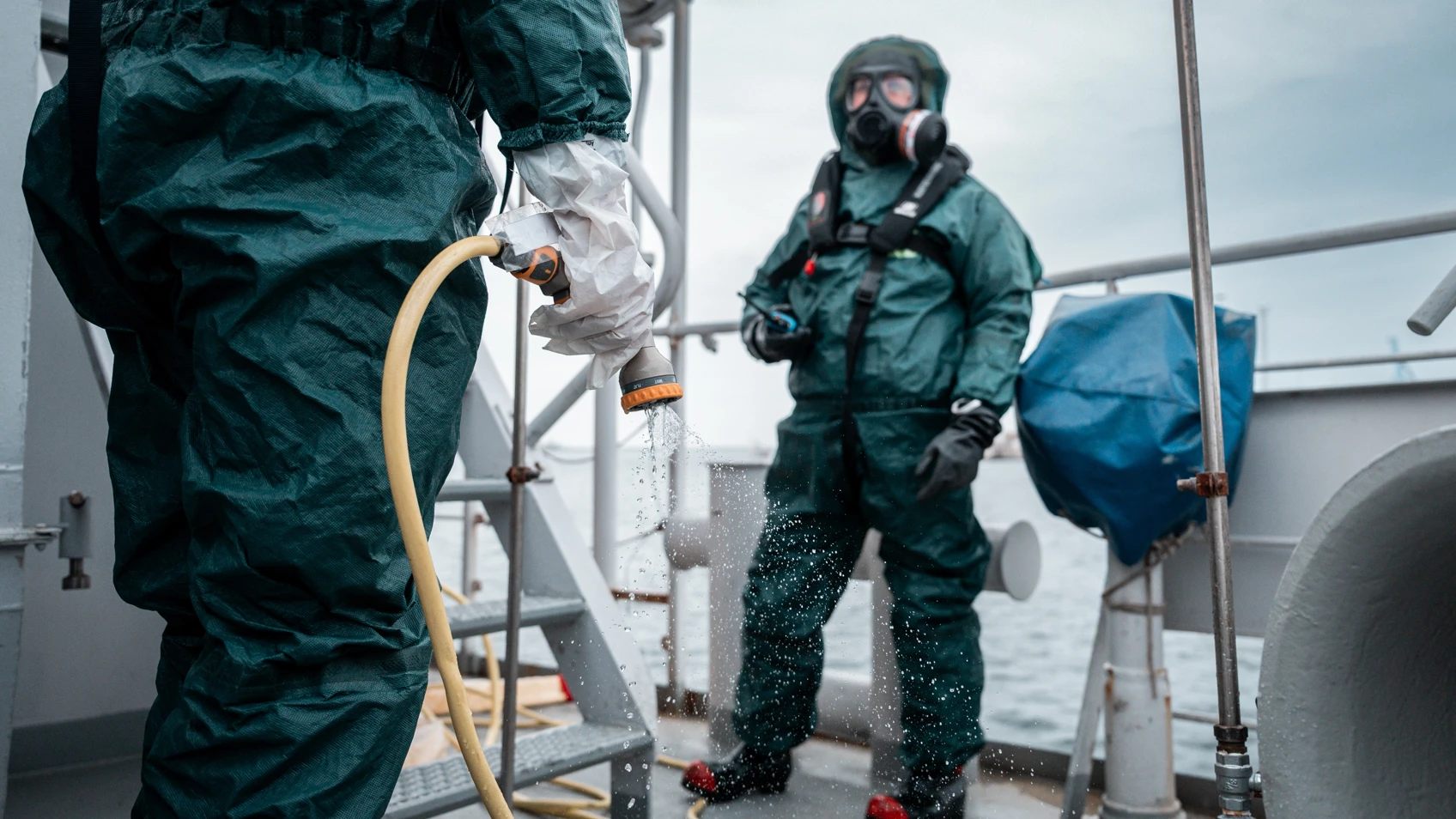
The Coast Guard is able to decontaminate both people and materiel from harmful substances. On all our response vessels, a decontamination station can be set up. It can decontaminate injured people without protective equipment, or chemical divers who have worked with a harmful substance.