
Control of commercial fishing
The Swedish Coast Guard has the main responsibility for controlling commercial fishing at sea. Its work must help to increase or maintain compliance with the rules, which makes long-term sustainable stocks of fish and shellfish possible.
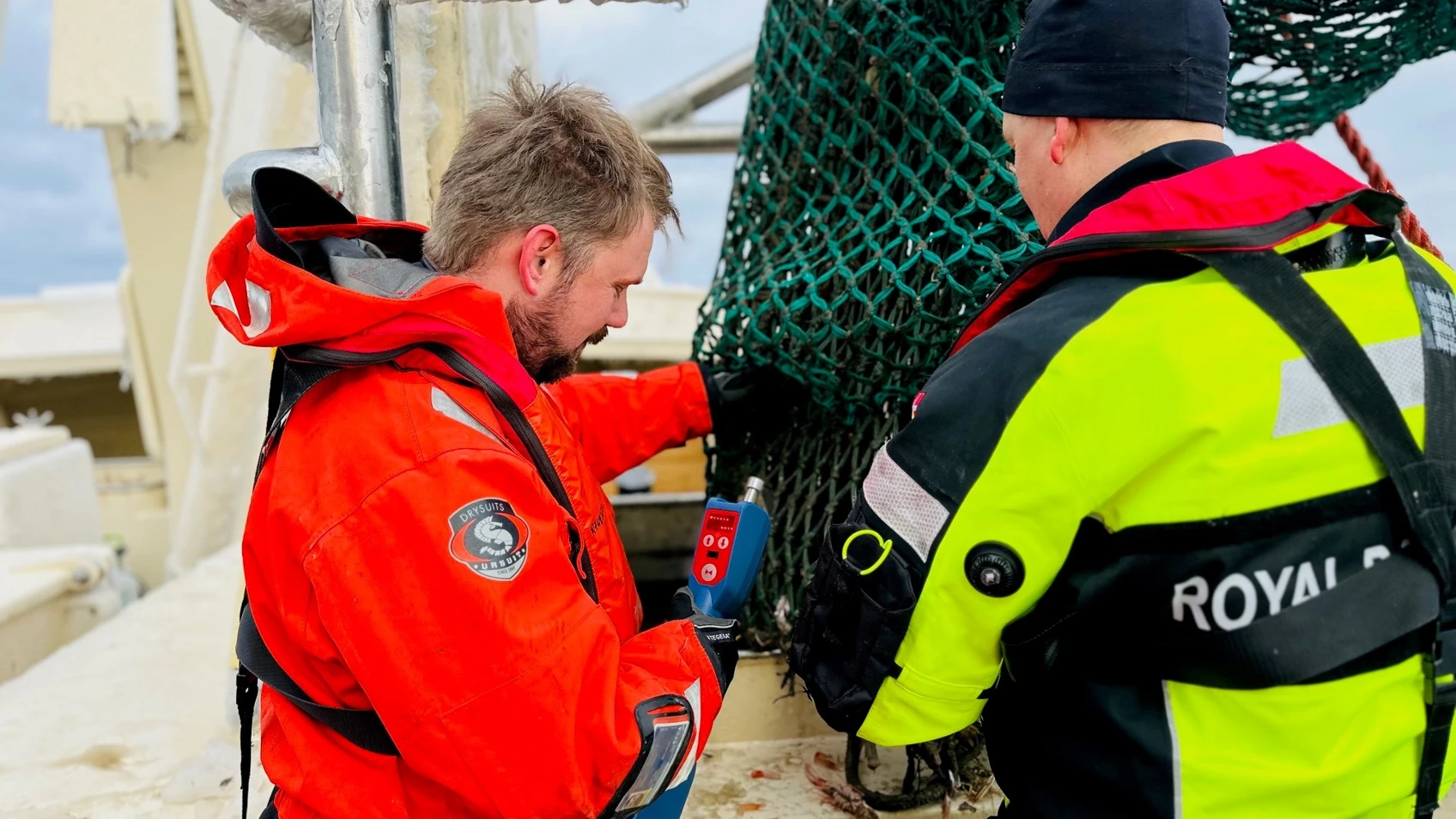
To achieve this, the Coast Guard carries out surveillance and inspections using both vessels and aircraft. Among other things, it checks fishing areas, permits, logbooks, gear, catch and prohibited areas.
The Coast Guard's fishing surveillance and control of commercial fishing are planned and managed on the basis of a national supervision plan. The plan is produced every year in cooperation with the Swedish Agency for Marine and Water Management. The two agencies work closely together, guided by an agreement on cooperation. The Swedish Agency for Marine and Water Management has overall responsibility for all fisheries control in Sweden. It also has specific responsibility for landing control.
All EU countries must work together to protect fish stocks and make sure that only the permitted quantity of fish is caught. At the same time, they must manage the fishing fleets and maintain a viable fishing industry.
The Coast Guard is responsible for Sweden's part of the control measures that the EU carries out at sea. It cooperates with the European Fisheries Control Agency (EFCA), especially on control operations within the Joint Deployment Plan (JDP). The Coast Guard is also responsible for Sweden's part of the surveillance that the European Union carries out at sea in the area regulated by the North-East Atlantic Fisheries Commission (NEAFC).