

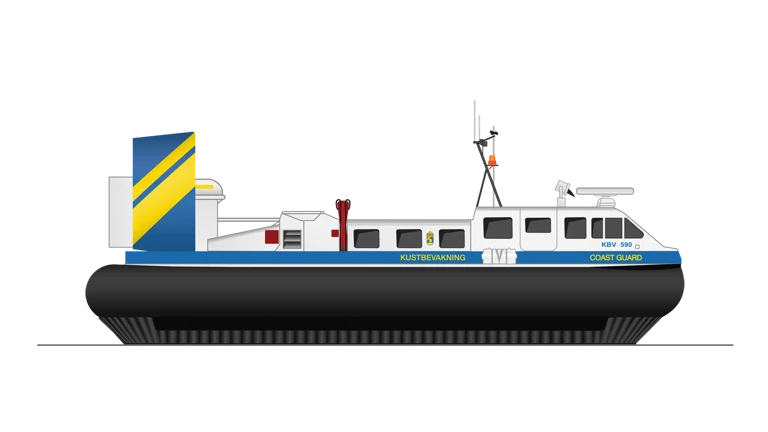
Hovercraft
The Swedish Coast Guard has hovercrafts. We use them mainly in northern Sweden during the winter months for transport when ordinary boats cannot get through.
Our vessels, aircrafts and equipment are the Coast Guard’s primary tools for carrying out our missions. The fleet includes, amongst other things, multi-purpose vessels, environmental protection and surveillance vessels, hovercraft and various types of boats, which are further reinforced by our fleet of aircraft.
The Swedish Coast Guard has hovercrafts. We use them mainly in northern Sweden during the winter months for transport when ordinary boats cannot get through.
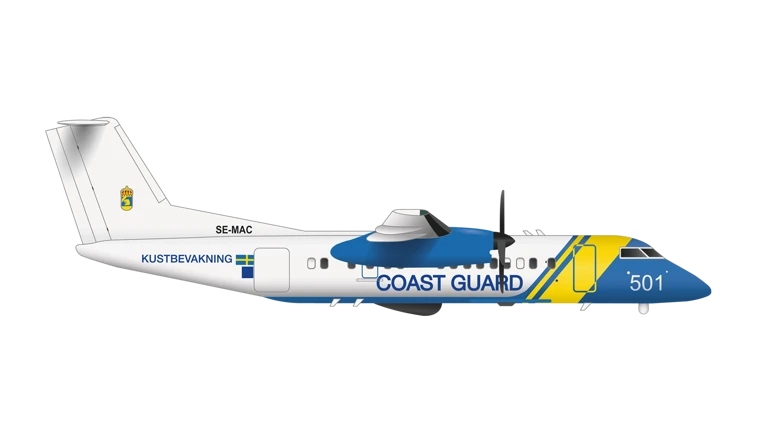
The Swedish Coast Guard has three advanced aircrafts, KBV 501-503, of the type Dash 8 Q-300 MPRA (Maritime Patrol and Reconnaissance Aircraft).
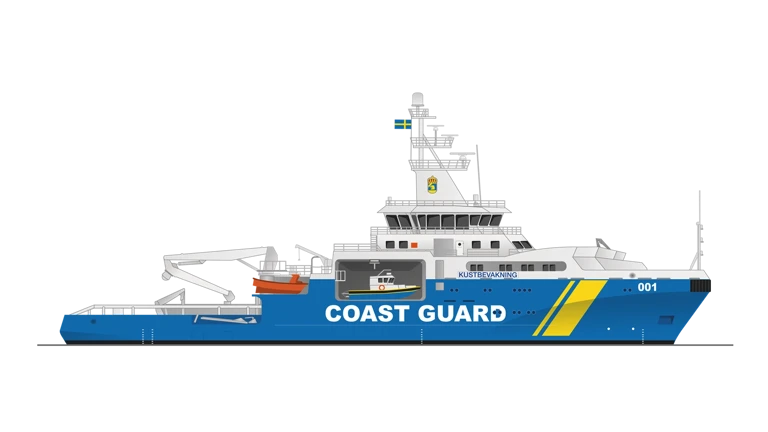
The Swedish Coast Guard's 001 series consists of three combination vessels: KBV 001 Poseidon, KBV 002 Triton and KBV 003 Amfitrite. They are used for both environmental protection and surveillance. This includes tasks such as border control, fisheries supervision, maritime traffic monitoring, and police and customs-related controls at sea.
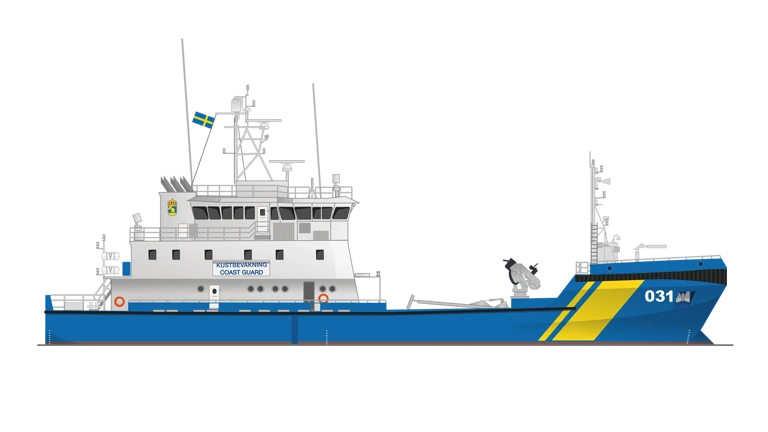
The Swedish Coast Guard's 031 series consists of four combination vessels built in 2010–2013 for both pollution response and surveillance.
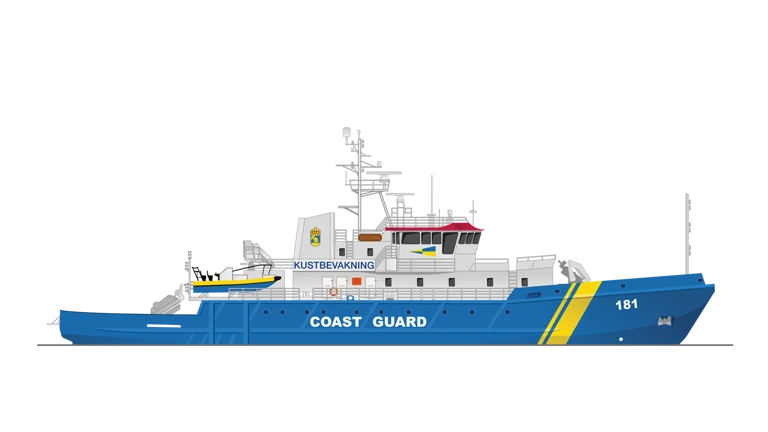
The combination vessel KBV 181 is based on the Finnish Border Guard's offshore patrol vessels Tursas and Uisko. The vessel has a high ice class. It is stationed in Umeå for pollution response in an Arctic environment.
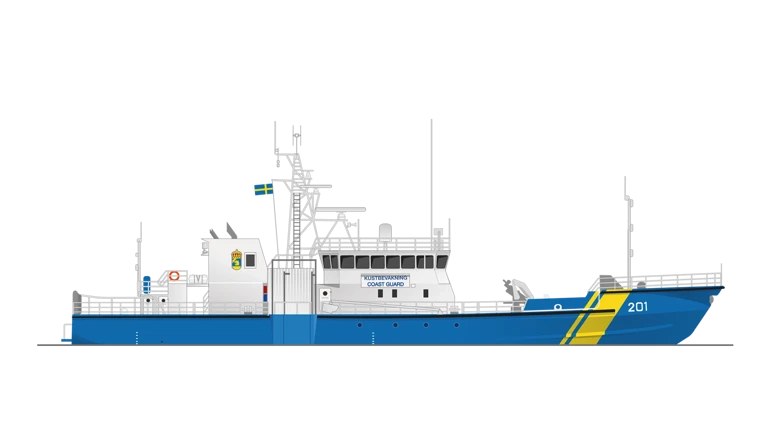
The Swedish Coast Guard's combination vessels in the 201 series are vessels for maritime surveillance and environmental response at sea. The Karlskrona shipyard delivered them in September 2001.
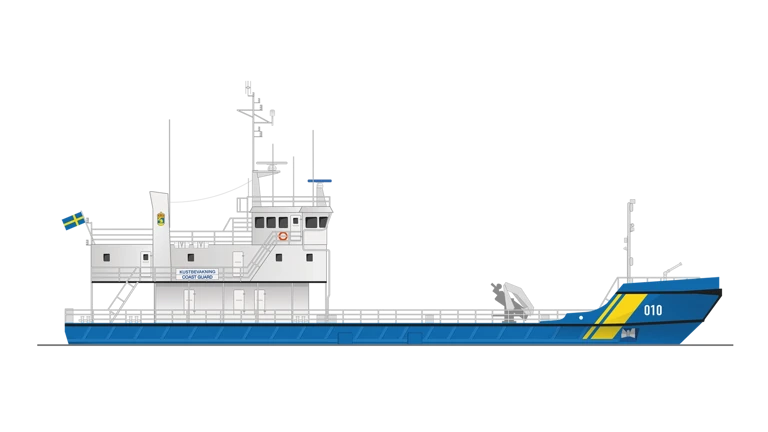
The Swedish Coast Guard's KBV 010 series consists of response vessels that were built at Lunde shipyard and delivered in 1985.
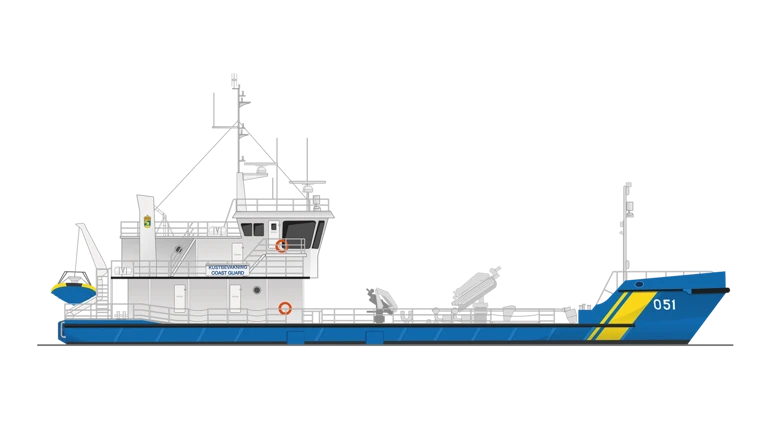
The response vessels KBV 050 and KBV 051 make up the Swedish Coast Guard's KBV 050 series.
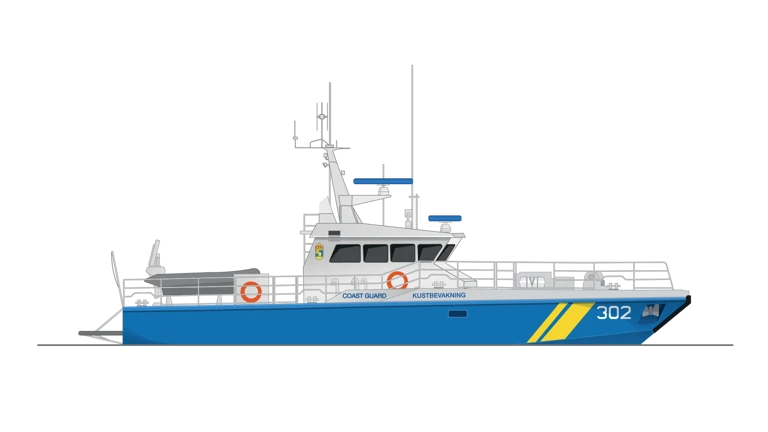
The KBV 301 series has eleven patrol vessels that were built by the Karlskrona shipyard and delivered from 1995.
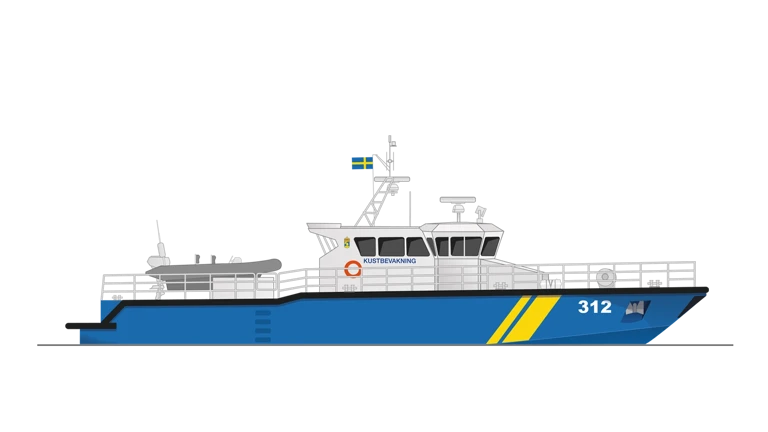
The KBV 312 series consists of five vessels. They were built by Baltic Work Boats on Saaremaa (Ösel) in Estonia and were delivered in 2012–2013.